
ELDAC Digital Dashboard
Making use of what we already have
Aged care services collect large volumes of clinical and care data, yet this information often doesn’t inform care. The result is data that is rich in volume but limited in practical use, particularly for end-of-life care oversight.
The challenge isn’t data availability. It is knowing which data elements reflect evidence-based practice, which signal clinical risk, and how to consolidate these into actionable intelligence that demonstrates alignment with the Aged Care Quality Standards.
The ELDAC Dashboard addresses this directly. It transforms routinely collected clinical data into a structured, evidence-based view of end-of-life care, enabling services to identify care gaps early, demonstrate quality consistently, and support better outcomes for residents and families.
Note: The Dashboard is designed for residential aged care services. A separate solution for Support at Home is in development.
Made for you, not for purchase
The ELDAC Dashboard is now available as a Power BI model, enabling aged care services to build and implement it in-house. We provide everything you need: the complete model, data specifications, implementation guides, and support. The model is provided at no cost. It represents over a decade of research and evidence translation to improve care of older Australians.
Backed by a program, not just a tool
The Dashboard is part of the comprehensive ELDAC program. When you identify gaps in care practice, you can draw on the full suite of ELDAC resources: the Linkages Program for service improvement support, the Knowledge Hub for evidence-based guidance, and Toolkits for clinical practice. The Dashboard shows you where to focus. The ELDAC program gives you the tools to act.
Why have the ELDAC Dashboard?
The Dashboard moves your service from good intentions to visible, demonstrable end-of-life care practice. It provides a shared, evidence-informed view of care that supports action at the bedside, oversight at the service level, and accountability at an organisational level.
What the ELDAC Dashboard enables
The Dashboard supports services to:
- identify residents with emerging end-of-life and needs early
- enable timely advance care planning
- support ongoing family conversations.
See how it works for your role
Aged Care Staff and Clinicians
Make care needs visible when it matters most
The ELDAC Dashboard gives you real-time insight into your residents’ end-of-life needs. It helps you prioritise care, have timely conversations, and ensure residents’ preferences guide day-to-day practice.
Executives and Boards
Turn oversight into evidence-based assurance
The ELDAC Dashboard gives you confidence in the quality of end-of-life care across your service. It helps you see trends, identify where resources are needed, and ensure care aligns with sector expectations.
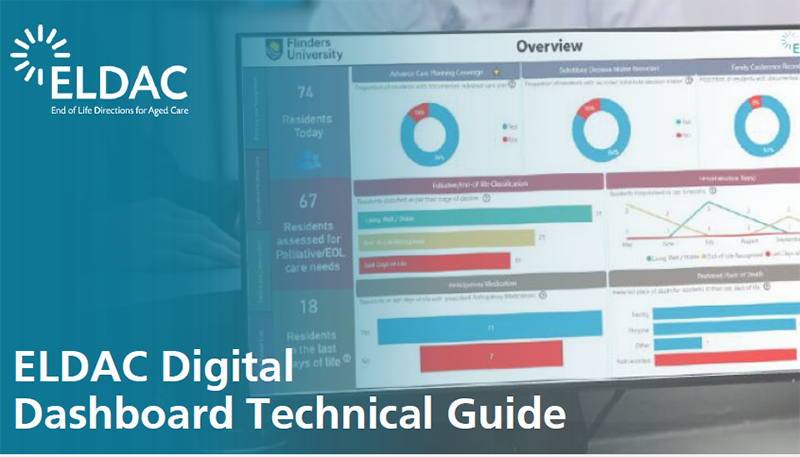
The ELDAC Dashboard works with any clinical system using a standardised data layer and Power BI visualisation. Deployment is quick, with low maintenance, and designed to fit your existing IT environment.

End-of-life care visibility is now a core sector expectation. Mapping your system to the ELDAC data points makes implementation simple for your clients and helps them deliver and demonstrate quality end-of-life care.
Get in touch
Frequently asked questions
-
Is this Dashboard suitable for Home Care / Support at Home services?
-
Is this a new Dashboard or has it been used before?
-
We've tried dashboards before and no one uses them. Why would this be different?
-
How much is this going to cost us really?
-
The board keeps asking "how do we know our palliative care is good?" Will this actually answer that?
-
What happens if our data shows we're doing badly?
-
Can we benchmark our performance against other aged care services?
-
Who do I actually talk to if we want to explore this?
Power BI Dashboard Release Webinar: Recording available now
Thank you for joining us for the webinar.
If you would like a refresher, or missed the session, the webinar recording is now available.
Watch the video
Page updated 25 September 2026
This website may capture information to improve user experience. By using our website you consent to this in accordance with our Privacy Statement.