
-
Home Care Clinical Care Assess Your Knowledge Organisational Support
Case Study – John
 Mr John Smith is an 82-year-old man with dementia. He was previously active and living with his daughter, Emily. She is John’s appointed substitute decision-maker and was his primary carer. He is now cared for at your residential aged care home. John has settled into his room, which is dementia-friendly and supports his abilities. The home promotes independence and engagement of the older person with dementia. The environment helps reduce risks and there is access to gardens with enhanced wayfinding. Lately Emily has noticed a significant decline in her father’s cognitive and physical abilities. John has also been experiencing increased pain due to arthritis, which is impacting his quality of life.
John’s cognitive decline has been marked by several significant changes:
- Memory Loss: Increasing difficulty remembering recent events, names, and faces.
- Confusion: Frequently disoriented about time, place, and familiar environments.
- Language Difficulties: Struggling to find the right words and follow conversations.
- Decision-Making: Experiencing difficulty making decisions, even for simple tasks.
- Behavioural Changes: Increased agitation, anxiety, and occasional attempts to exit the home to catch a bus.
- Activities of Daily Living: Difficulty performing daily activities like dressing, eating, continence and personal hygiene.
These changes have profoundly impacted his ability to function independently and engage meaningfully with his surroundings and others. Emily has told you that she is concerned and feeling guilty about her father’s decline. She wants to have the GP visit to assess her father and undertake a case conference review.
Key messages
This case study highlights the importance of a comprehensive, multidisciplinary approach to caring for an older person with dementia. Engaging in advance care planning conversations and using comprehensive clinical tools for holistic symptom assessment enables the healthcare team to provide personalised and compassionate care that addresses both the needs of older person with dementia and their family and carers.
These key messages highlight the importance of a holistic, person-centred approach to dementia care that can ensure the best possible outcomes for both the older person with dementia and their family and carers.
- Advance Care Planning: Early and regular advance care planning conversations are crucial for respecting the wishes of the older person with dementia and supporting person-centred end-of-life care.
- Multidisciplinary Approach: Effective dementia care requires collaboration among the multidisciplinary team to ensure comprehensive and coordinated care.
- Pain Management: Pain should be assessed and monitored regularly. A pain management plan should include both pharmacological and non-pharmacological approaches for maintaining quality of life.
- Continuity of Care: Continuous monitoring and timely interventions help manage the progression of dementia and other health issues.
- Person-Centred Care: Care should be personalised to the individual’s needs, preferences, and abilities to enhance their well-being and dignity.
- Family Support: Providing resources and emotional support to family and carers is vital for their wellbeing and the quality of care provided.
- Dementia-Friendly Environment: Ensure that the residential aged care home is safe and accessible. Provide an engaging environment that supports the abilities and independence of older people with dementia.
- Bereavement Support: Offering thoughtful words and actions to families and carers after a death supports their loss and honours the deceased person’s memory. Following a death, self-care and care of other residents is important for the wellbeing of everyone in the community.
Page updated 14 September 2026
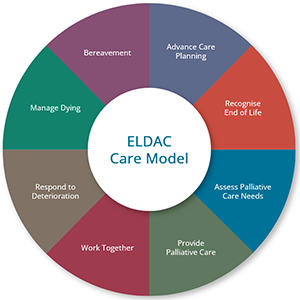 This case study on John demonstrates how to apply the elements in the ELDAC Care Model in the context of an older person with dementia residing in Residential Aged Care (RAC). The ELDAC Care Model includes 8 clinical elements. The
 This website may capture information to improve user experience. By using our website you consent to this in accordance with our Privacy Statement.